

 Get my Cookbooks!
Homemade Pizza

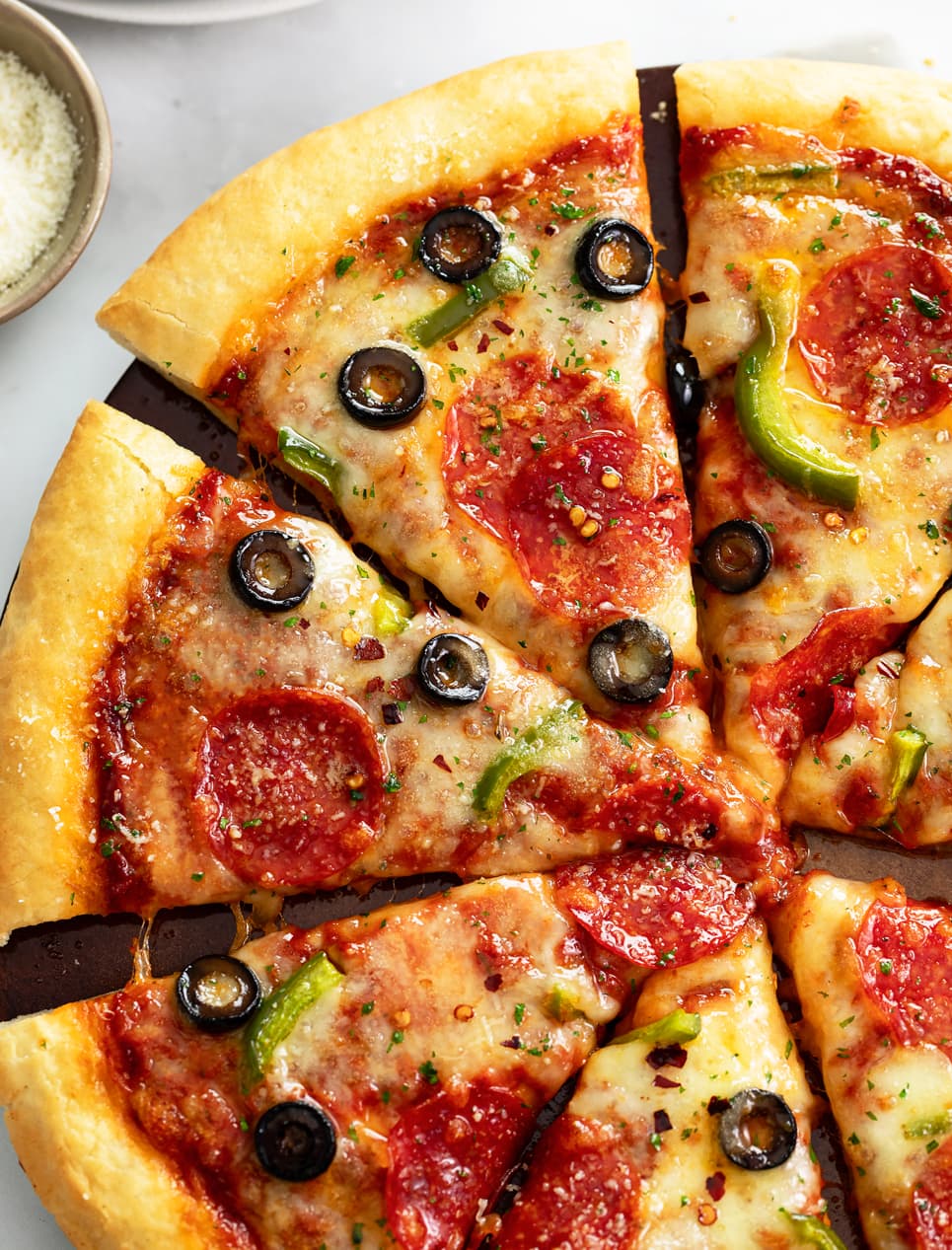
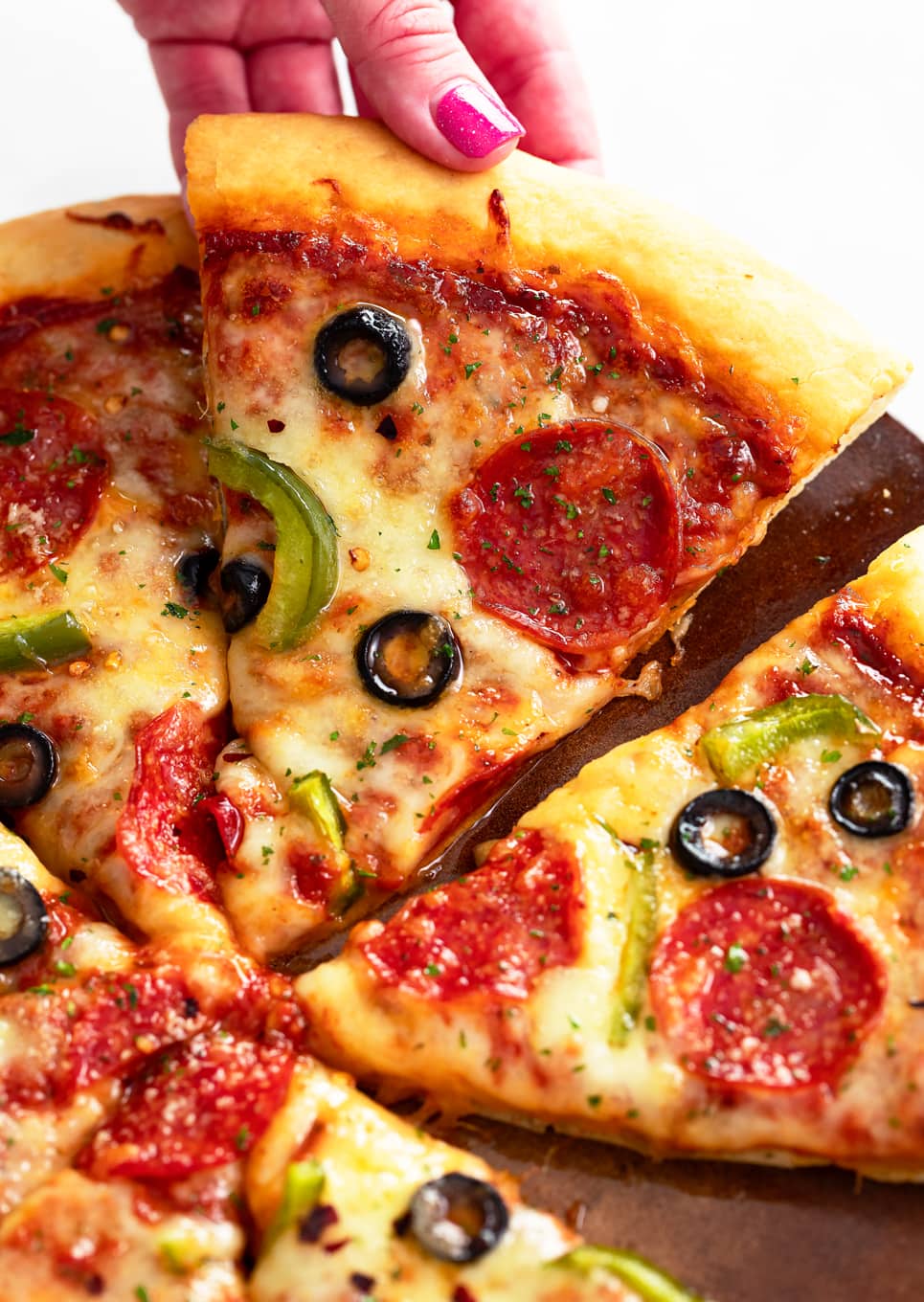
This Homemade Pizza Recipe is easy to make from scratch with a golden, crispy crust that’s soft and fluffy on the inside! Top it with pizza sauce, melted mozzarella cheese, and all of your favorite toppings for the ultimate homemade pizza night!
Be sure to try my Buffalo Chicken Pizza, Greek Pizza, and Hawaiian Pizza recipes next!
Homemade Pizza
Nothing beats homemade pizza night! 🍕 Especially when you’ve got an easy homemade pizza dough that bakes up golden and crispy on the outside, with a soft, pillowy center. (If you’re not usually a crust eater, that’s about to change!)
What I love most about this dough is that it’s sturdy enough to hold all of your favorite toppings without getting soggy. Whether you keep it simple with cheese and pepperoni or load it up with veggies, this crust can handle it!
I’ll walk you through how to make pizza from scratch, along with my best tips for getting a crispy crust, choosing toppings, and preparing the dough ahead of time. Let’s get into it!
How to Make It
See recipe card below this post for ingredient quantities and full instructions.
Combine the yeast, sugar, and warm water (105–115°F) in a small bowl. Cover and let sit for 5 minutes. In a separate bowl, combine half of the flour with the salt and garlic powder. Add the yeast mixture and olive oil, then gradually stir in the remaining flour.
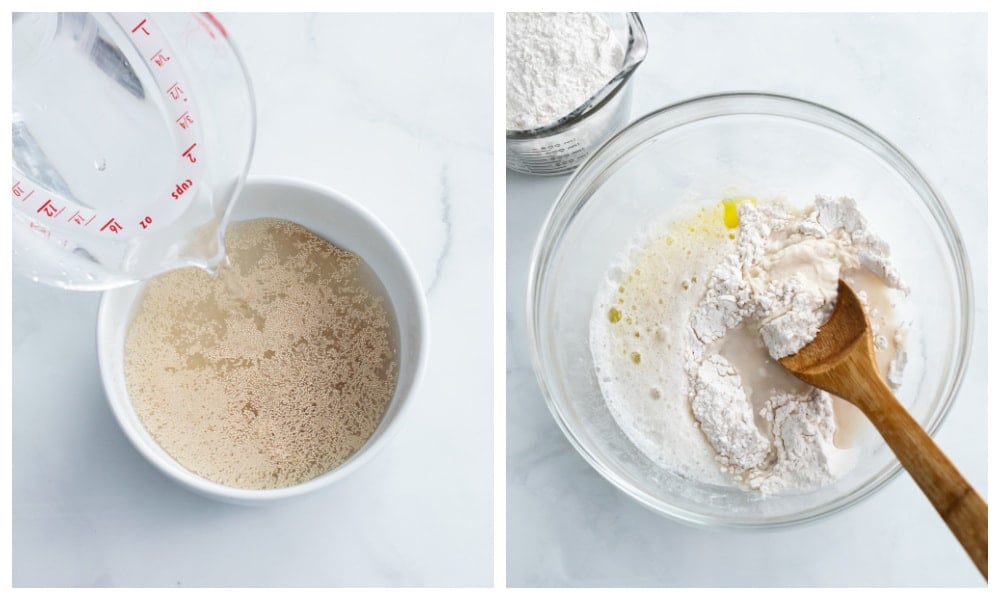
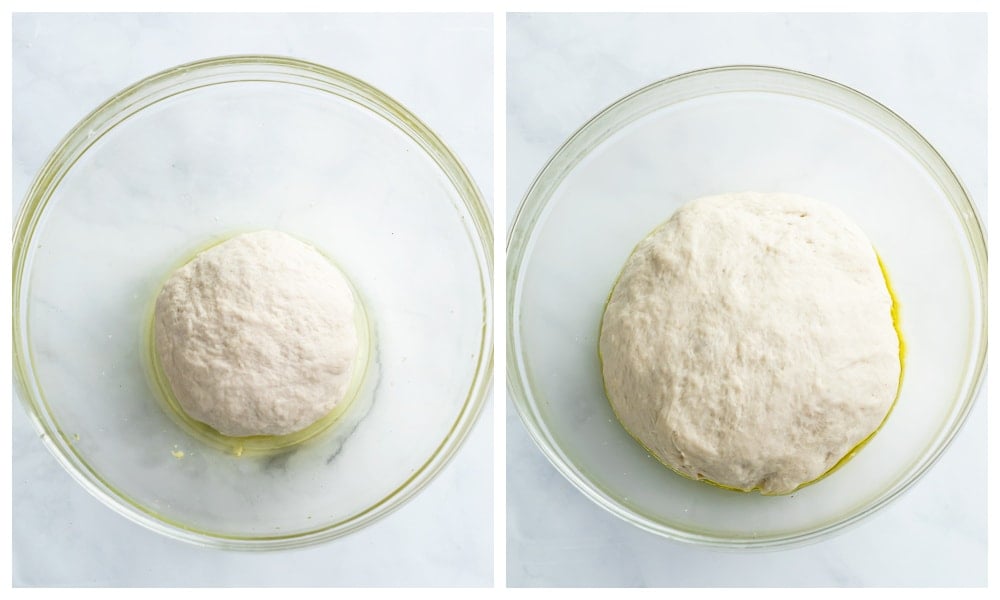
Knead the dough for 3–5 minutes until smooth and elastic. Transfer to a lightly oiled bowl, cover, and let rise until doubled in size, about 30–60 minutes or longer. Gently punch down the dough and knead a few times. Shape into a 12-inch circle.
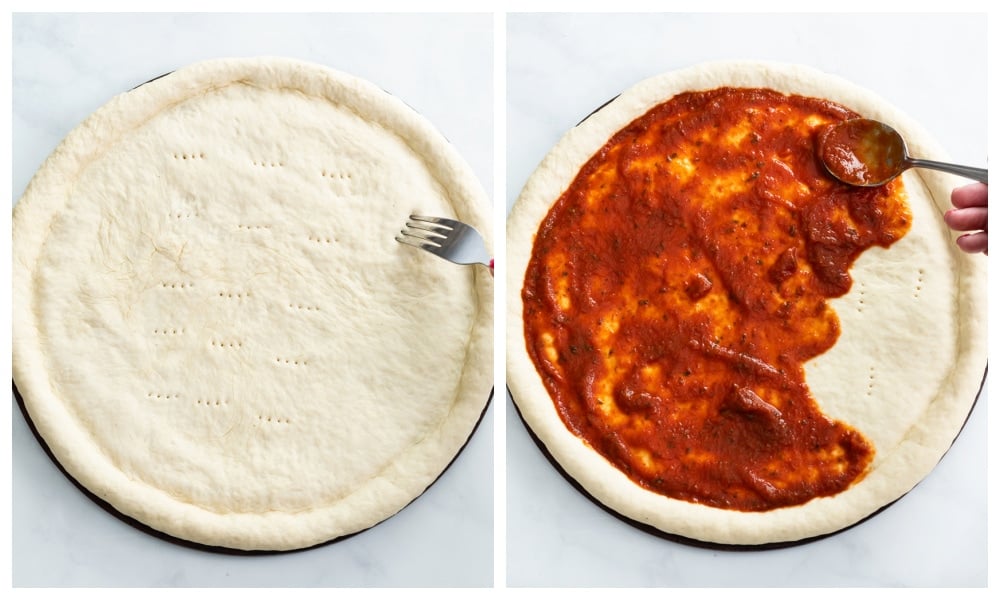
Transfer the dough to your prepared pizza pan. Use a fork to gently poke holes in the crust to prevent large air bubbles. Brush with olive oil, then spread the pizza sauce evenly over the surface.
Add mozzarella cheese and your favorite toppings. Bake in a preheated 450°F oven for 13–15 minutes, until the crust is golden and the cheese is melted. Slice and serve!

Bread Flour vs. All-Purpose Flour
Both bread flour and all-purpose flour work well for this homemade pizza dough, but there are a few differences:
- Bread Flour: Has a higher protein content, which creates more gluten development and gives the crust a slightly chewier, stretchier texture.
- All-Purpose Flour: Produces a slightly softer, more tender crust. It’s a great option if that’s what you have on hand!
- Measure Carefully: I highly recommend weighing your flour with a kitchen scale for the most consistent results. Adding too much flour can make the dough dry and difficult to stretch.
Gluten-Free Flour: Gluten-free pizza dough requires different handling and may need a specially formulated blend. I recommend using a tested gluten-free pizza dough recipe rather than assuming a 1-to-1 flour substitution will produce identical results.
Best Oven Temperature for Homemade Pizza
A hot oven is one of the biggest secrets to making restaurant-quality pizza at home!
I bake this pizza at 450°F, which gives the crust time to become golden and crispy while the cheese melts beautifully.
- Preheat Thoroughly: I recommend letting the oven preheat for at least 20 additional minutes after it reaches 450°F, especially if you’re using a pizza stone.’
- Pizza Stone: A preheated pizza stone helps transfer heat directly to the bottom of the crust for a crispier finish. Be careful when transferring the pizza to the hot stone!
- Check the Bottom: Before removing the pizza, gently lift an edge of the crust with a spatula. It should be lightly browned and crisp, not pale or doughy.
- Avoid Overloading: Too much sauce or too many toppings can add excess moisture and prevent the crust from crisping properly.
PRO TIP: Even if the cheese has melted, give the crust enough time to finish baking. I find that 15 minutes is perfect in my oven!
Homemade Pizza Toppings
One of the best things about homemade pizza is that you can customize it however you want! Here are some of my favorite combinations and toppings:
- Classic Favorites: Pepperoni, Italian sausage, ground beef, bacon, ham, and meatballs.
- Vegetables: Bell peppers, onions, mushrooms, spinach, tomatoes, broccoli, banana peppers, jalapeños, and garlic.
- Cheese: Whole-milk mozzarella, Parmesan, provolone, ricotta, feta, and goat cheese.
- Sauces: Classic pizza sauce, marinara, BBQ sauce, or ranch.
- Finishing Touches: Fresh basil, parsley, oregano, red pepper flakes, and freshly grated Parmesan.
My Favorite Tip: Cook meats completely before adding them to the pizza, and sauté vegetables that release a lot of moisture, such as mushrooms. This helps prevent a soggy crust.
For even more flavor, brush the crust with my Olive Oil Bread Dip! It’s SO good!
More Pizza Recipes: Be sure to try my Buffalo Chicken Pizza, Hawaiian Pizza, and Cast Iron Skillet Pizza!
Pro Tips
- Yeast: I use instant yeast for this recipe, but active dry yeast also works well. Be sure the water is between 105–115°F so it’s warm enough to activate the yeast without being too hot.
- Let the Dough Rise: A warm environment (around 75–78°F) is ideal. On colder New Hampshire days, I’ll sometimes warm a dish towel in the dryer and place it over the covered bowl to help keep the dough cozy while it rises!
- Don’t Add Too Much Flour: The dough should be soft and slightly tacky, but manageable. Add extra flour gradually while kneading, only as needed. Too much flour can make the crust dense.
- Let the Dough Relax: If the dough keeps shrinking back when you stretch it, let it rest, covered, for 10–15 minutes before trying again. This allows the gluten to relax and makes it easier to shape.
- Mozzarella: Use whole-milk, low-moisture mozzarella, not fresh mozzarella packed in water. Shred it from a block for the best flavor and melting consistency.
- Don’t Overload the Pizza: This dough is sturdy enough for plenty of toppings, but avoid using too much sauce or adding ingredients that contain excess moisture.
- Crispy Crust: Make sure your oven is fully preheated before baking. A pizza stone is great for achieving a golden, crisp bottom!
- Salt: I love using Redmond Real Salt for baking and cooking. Regular table salt can also be used. (Use code COZY for 15% off!)
- High Altitudes: Higher elevations can affect how quickly yeast dough rises. Keep an eye on the dough rather than relying only on the suggested rising time. See King Arthur Baking’s high-altitude guide for additional guidance.
- Shortcut: If you don’t have time to make homemade dough, you can use 1 lb. of store-bought pizza dough instead. My French Bread Pizza and Naan Pizza are other great shortcuts!
Make-Ahead Method
- Prepare the Dough: Make the pizza dough as outlined and allow it to complete its first rise. Gently punch it down and shape it into a ball.
- Refrigerate: Lightly coat the dough with olive oil and store it in a covered, airtight container in the refrigerator for up to 3 days. Make sure the container has enough room for the dough to expand.
- Freeze: Wrap the dough tightly and place it in a freezer-safe bag. Freeze for up to 3 months for best quality.
- When Ready to Bake: Allow refrigerated dough to sit at room temperature for approximately 30–60 minutes, or until relaxed and easy to stretch. Shape, top, and bake as outlined.
How to Thaw Frozen Pizza Dough
- Thaw the dough in the refrigerator overnight, allowing additional time for larger or tightly wrapped portions.
- Remove from the refrigerator and let it sit at room temperature for 30–60 minutes, or until it’s soft, relaxed, and easy to stretch.
- Shape the dough, add your favorite toppings, and bake as outlined in the recipe.
- PRO TIP: If the dough keeps shrinking back while you’re shaping it, give it another 10–15 minutes to rest before continuing.
Storage and Reheating
- Refrigerate: Store leftover pizza in an airtight container in the refrigerator for up to 3 days.
- Freeze: Wrap slices individually and freeze in an airtight, freezer-safe container for up to 3 months for best quality.
- Reheat: Place cold pizza on a baking sheet and loosely cover with foil. Bake at 350°F for 8–12 minutes, or until heated through. Remove the foil during the last few minutes if you want a crispier crust.
- Skillet Method: For individual slices, reheat in a covered skillet over medium-low heat until the bottom is crispy and the cheese is melted.
Tools For This Recipe
(Amazon affiliate links)- Check out all of my kitchen essentials here.
- Cheese Grater– Always shred whole milk, low moisture mozzarella from a block! It will melt and taste much better.
- Kitchen Scale– Weigh flour when baking whenever possible, this can ensure your finished product comes out as expected!
- Mixing Bowls– These 3 sizes are perfect for the bowls needed in this recipe!
- Wooden Spoon– Nice and sturdy for mixing!
- Rolling Pin– My preferred tool for rolling out the dough.
- Pizza Stone– Ensures optimal and efficient cooking. (Works well for bread, cookies, and calzones as well!)
- Pizza Cutter– This one takes up little space!
- Cheese and Red Pepper Flakes Shakers– Just like the restaurants use!
Try These Next
-
- Stromboli
-
- Chicken Parmesan
-

- Buffalo Chicken Pizza
-

- Pizza Pasta
-
- Baked Ravioli
-

- Stuffed Shells
Get My Free E-Book!
- I’ve got a FREE e-Book with 7 super popular dinner recipes! Join my email list for your free recipe e-book and I’ll send your e-Book right over!
- And be sure to follow me on Instagram, Pinterest, & Facebook!
Tried This Recipe?
Leave a review, I love hearing your feedback! ⭐⭐⭐⭐

Homemade Pizza
Ingredients
For the Dough
- 2 ¼ teaspoons instant yeast, equal to 1 packet. See notes
- ¾ cup warm water, 105-115° F
- 2 teaspoons sugar
- 2 cups all-purpose or bread flour, plus up to 1/3 cup as needed (250-290 g)
- 1 teaspoon salt
- ¼ teaspoon garlic powder
- 2 tablespoons olive oil, plus more for bowl/crust
For the Pizza
- ½ cup pizza sauce
- 1 ½ cups mozzarella cheese, whole milk low moisture
- pizza toppings, as desired
Pizza Garnishes
- Roughly chopped parsley
- Freshly grated Parmesan cheese
- Red pepper flakes
Instructions
- In a small bowl, dissolve the yeast and sugar in the warm water. (The warm water and sugar activates the yeast.) Cover with plastic wrap and set aside for 5 minutes.
- In a large bowl, add the salt, garlic powder, and 1/2 of the flour. Stir to combine. Add the warm water/yeast mixture and the olive oil. Use a wooden spoon to stir well, then gradually stir in the remaining cup of flour. Continue to stir until an elastic ball has formed, slightly sticking to the sides of the bowl.
- Dust your hands with flour and knead the dough in the bowl for 3-5 minutes. If the dough becomes too sticky, gradually add additional flour in small dustings, up to 1/3 cup additional. If you poke the dough with your finger and it slowly comes back, it’s ready to rise. Shape into a ball.
- Drizzle a separate large glass bowl with a little olive oil and use a pastry brush to distribute the oil on the bottom and sides. Add the ball of dough. Cover with plastic wrap and allow it to rise for 30-60+ minutes, until doubled in size. (This gives time to for the gluten to develop, which allows the dough to stretch without breaking.) You can also let it rise in the fridge overnight.
- Preheat oven to 450° F during the last 30+ minutes to ensure it has plenty of time to get fully up to temperature. Optional: Place the pizza pan (or stone) in the oven as it preheats.
- Gently punch down the dough and knead it 5 times to smooth it out.
- Spread the dough into an even 12-inch circle, either with your hands or with a rolling pin. (I also like to use my fingers to form a crust along the edge.)
- Remove the pizza pan from the oven and sprinkle it with a thin, even layer of flour. Transfer the dough onto it.
- Use a fork to gently poke holes in the dough to prevent the crust from bubbling up as it bakes. Drizzle it with 1 tablespoon olive oil and use a pastry brush to spread it out over the dough.
- Top with pizza sauce, cheese, and toppings.
- Bake for 13-15 minutes. Even if the cheese is melted, give the crust enough time to cook and crisp on the bottom, resist the urge to remove it too early, but don’t let it get too brown on the top. Mine takes 15 minutes exactly.
- Remove the pizza from the oven and use a spatula to lift the crust to check the bottom, ensuring it’s slightly browned and crisp.
- Garnish with parsley, grated Parmesan, and red pepper flakes if desired. Slice and serve!
Notes
- Yeast: Instant yeast is my preference, but active dry yeast can also be used. The water should be 105–115°F.
- Flour: Bread flour yields a slightly chewier crust, while all-purpose flour creates a softer texture. Weigh the flour for the most consistent results.
- Rising: A warm environment around 75–78°F is ideal. Let the dough rise until doubled in size.
- Dough Texture: The dough should be soft and slightly tacky. Add extra flour sparingly to prevent a dense crust.
- Cheese: Use whole-milk, low-moisture mozzarella, preferably shredded from a block.
- For a Crispy Crust: Preheat the oven thoroughly, avoid using excessive sauce, and don't overload the pizza with toppings.
- Make Ahead: Pizza dough can be prepared in advance and refrigerated or frozen. See the blog post for detailed instructions.
- Shortcut: Use 1 lb. of store-bought pizza dough if you prefer!
- For even more flavor, brush the crust with my Olive Oil Bread Dip! It's SO good!
- More Pizza Recipes: Be sure to try my Buffalo Chicken Pizza, Hawaiian Pizza, and Cast Iron Skillet Pizza!
Make-Ahead Method:
- Prepare the Dough: Make the pizza dough as outlined and allow it to complete its first rise. Gently punch it down and shape it into a ball.
- Refrigerate: Lightly coat the dough with olive oil and store it in a covered, airtight container in the refrigerator for up to 3 days. Make sure the container has enough room for the dough to expand.
- Freeze: Wrap the dough tightly and place it in a freezer-safe bag. Freeze for up to 3 months for best quality.
- When Ready to Bake: Allow refrigerated dough to sit at room temperature for approximately 30–60 minutes, or until relaxed and easy to stretch. Shape, top, and bake as outlined.
Storage and Reheating
- Refrigerate: Store leftover pizza in an airtight container in the refrigerator for up to 3 days.
- Freeze: Wrap slices individually and freeze in an airtight, freezer-safe container for up to 3 months for best quality.
- Reheat: Place cold pizza on a baking sheet and loosely cover with foil. Bake at 350°F for 8–12 minutes, or until heated through. Remove the foil during the last few minutes if you want a crispier crust.
- Skillet Method: For individual slices, reheat in a covered skillet over medium-low heat until the bottom is crispy and the cheese is melted.




I really love this pizza recipe you shared my boss really love it ♥️♥️
I’m so happy you’re enjoying it Elaine!! I make this one a lot for my family and its always fun switching up the toppings! Thanks so much for taking the time to leave a comment!!💖
Thank you so much! I bwill make sure I follow these suggestions next time I make your recipe!
Sure thing my friend! 🙂 Anytime! Have a great rest of your day and a wonderful week ahead!
I love your recipes but the crust was hard? I don’t know why.
Hi! Define “hard”? I don’t know what you mean I guess. What did you cook the pizza on? I need more info to help 🙂
I baked it on a pizza stone. The edge was soft but the center wasn’t. It was good but tough. Not crisp.
Okay! This could be caused by a few things- if it was tough/leathery in the middle rather than crisp, it may have been underbaked/not quite ready to be pulled yet. Also, the dough may have been spread too thick in the middle. Another cause could be if the dough was under fermented (didn’t rise enough), or if the oven wasn’t hot enough. A super hot oven that’s had plenty of preheating time will yield the best result. It’s not so much the dough itself, especially if your issue was specific to the center of the pizza. It’s more about the overall technique.
I’d also recommend trying a cast iron skillet as a cooking vessel. My cast iron skillet pizza is AMAZING. I prefer it over using a pizza stone 🙂
I love the dough recipe. I think I put too much pepperoni on it. My husband wanted it totally covered with pepperoni. But the end product to me tasted too salty!! I think I need to put less pepperoni and more mozzarella! Any advice?
Hi Peg! I think it comes down to personal preference, you and your husband may need to hash this one out 🙂 You want more cheese, he wants more pepperoni, and I give my own measurements here already. ❤️